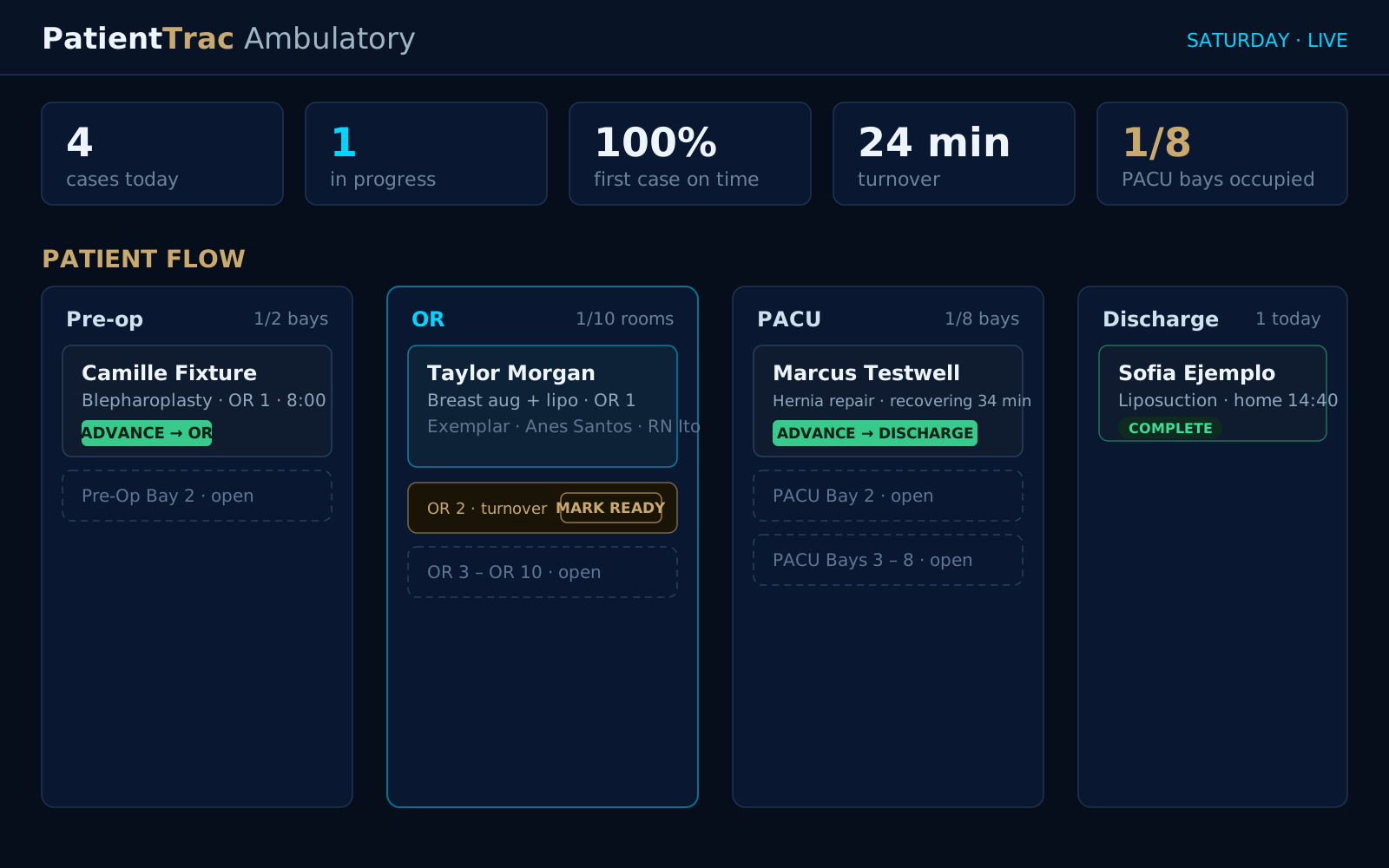
PatientTrac Ambulatory is the live operational floor of the ambulatory surgery center. Real-time case console and floor plan, three inventory catalogs, DEA controlled-substance logging, surgeon preference cards, and charge capture — one reactive, multi-user record for the active center.
The live case console, floor plan, inventory catalogs, and DEA log come together in one operational view of the active surgery center.
Supabase Realtime channels push case, event, and vitals changes to the board within about a second — a 30-second poll stays in place as a fallback. Every subscriber sees only the rows their organization's Row-Level Security policies allow.
Room-level status pills track each case as it moves through the day, backed by live channels on the case, event, and vitals tables.
Live room-utilization view and PACU bed map, tracking room and bed state as cases move through recovery.
The floor displays anesthesia vitals for situational awareness. Ambulatory reads this data — it never authors it. Anesthesia documentation is owned by PatientTrac Continuum.
Three catalogs cover what an ambulatory surgery center stocks and reprocesses, each gated by org isolation and the Ambulatory module entitlement.
A controlled-substance ledger designed around 21 CFR 1304.04 / 1304.21: append-only entries with a trigger-maintained running balance, and a hash-chained audit trail.
Every movement is a typed ledger entry; a database trigger maintains the running balance so it is never client-computed.
Filterable by date, schedule, and drug, over the same audited ledger.
Preference cards pre-stage cases; charge capture turns the documented case into a draft superbill and hands it off for billing.
Ambulatory opens onto an encounter_id created upstream in Forge, resolved through a 4-hour, single-use cross-app token. It can be launched from Forge, Surgery, Revela, or Mind — each part of one connected network.
Two apps, no overlap. The operational floor and the anesthesia record are deliberately separate.
Security is enforced by specific mechanisms — described here in plain terms rather than as a compliance badge.
Authentication is email + password plus a time-based one-time-password authenticator. No SSO, no OAuth. The QR secret is rendered locally and never sent to a third party.
Every view is gated by organization and the Ambulatory module entitlement, so a query only ever returns rows the signed-in org is allowed to see.
Controlled-substance access is written to a hash-chained audit store, with patient identifiers SHA-256 hashed before storage.
Strict headers (frame-deny, no-sniff, referrer and permissions policy) ship with the app, and AI and service keys stay server-side.
See the live case console, inventory catalogs, DEA log, and charge capture in a working demo — or sign in if you already have an account.